
Immersive Room Technology Explained: 9 Powerful Ways It Transforms Engagement
Immersive room technology is redefining interactive environments by blending visuals

Immersive Room Technology Explained
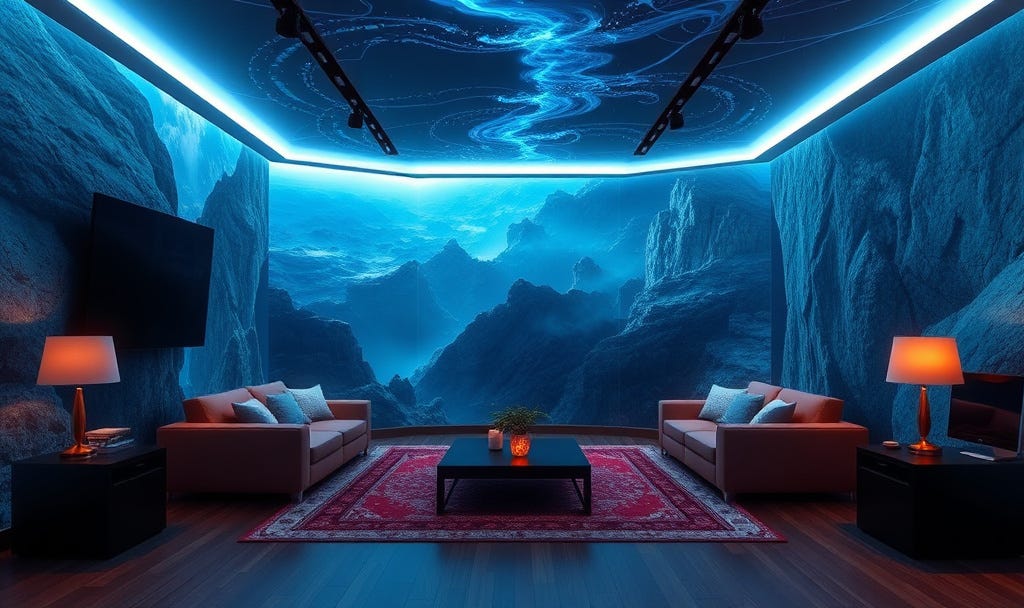
Immersive room technology is rapidly changing how people experience digital content in physical spaces. Instead of watching a screen from a distance, users step inside a fully synchronized environment where visuals, sound, and interactivity work together.
As organizations look for more meaningful ways to communicate ideas, train teams, and tell stories, the immersive room has become a practical and powerful solution.
This article explores how an immersive room works, where it delivers the most value, and why it’s becoming a smart long-term investment across industries. For a real-world implementation example, you can explore this detailed overview of an immersive room solution.
Understanding Immersive Room Environments
What Is an Immersive Room?
An immersive room is a controlled physical space enhanced with synchronized digital technologies that surround users with dynamic content. Unlike traditional presentation rooms, an immersive room uses walls, floors, and sometimes ceilings as active surfaces. The goal is simple: remove distractions and place people inside the message.
Immersive room environments are designed for groups rather than individuals. This makes them ideal for collaborative learning, guided experiences, and shared decision-making. Because users don’t need headsets or wearable devices, participation feels natural and inclusive.
Core Components of an Immersive Room
An effective immersive room relies on several integrated systems working together seamlessly.
Visual Systems
High-resolution projectors or LED panels are the backbone of any immersive room. These visuals often span multiple surfaces, creating a continuous canvas. Edge blending and color calibration ensure images appear seamless, even across corners.
Audio and Acoustics
Directional speakers and spatial audio design help sound match the visuals. Audio cues guide attention and reinforce realism. Acoustic treatments reduce echo and ensure clarity, even in larger immersive rooms.
Interactive Controls
Touch panels, motion sensors, or tablet-based controllers allow facilitators to guide the experience. In advanced setups, gesture recognition or real-time data integration adds another layer of interactivity.
How Immersive Rooms Differ From VR
While virtual reality isolates users, immersive room technology encourages shared experiences. Participants can see each other, communicate freely, and collaborate naturally. This distinction makes immersive rooms more suitable for training, exhibitions, and strategic presentations where group dynamics matter.
For a deeper technical comparison, this overview of immersive technology concepts provides helpful background.
Key Applications of Immersive Room Technology
Education and Training
Immersive room technology has proven especially effective in learning environments. By placing learners inside realistic scenarios, retention rates improve and abstract concepts become tangible.
Corporate Learning
Companies use immersive rooms for onboarding, safety training, and leadership development. Employees can walk through simulated environments, practice decision-making, and receive immediate feedback. Because the immersive room supports group sessions, discussions flow easily.
Academic Institutions
Universities and research centers use immersive rooms to visualize complex data, explore historical reconstructions, or simulate scientific processes. Students aren’t just observing—they’re participating.
Marketing and Brand Storytelling
Brands are turning to immersive room experiences to create emotional connections. Product launches, client presentations, and experiential campaigns benefit from controlled storytelling. When visitors step into an immersive room, attention levels rise, and messages stick.
An immersive room allows marketers to adapt content on the fly. Whether it’s adjusting visuals for different audiences or integrating live data, flexibility is built in.
Museums, Events, and Public Spaces
Cultural institutions use immersive rooms to bring exhibits to life. Visitors can explore environments that no longer exist or visualize concepts that are impossible to display physically. Because immersive room installations can be updated digitally, exhibits stay fresh without constant physical redesigns.
Benefits and ROI of Investing in an Immersive Room
Engagement and Retention Metrics
Studies consistently show that immersive environments increase engagement. When people are surrounded by content, distractions fade. This leads to better information retention and more meaningful interactions.
An immersive room supports storytelling that appeals to multiple senses. As a result, users remember not just facts, but experiences.
Scalability and Customization
One of the strengths of immersive room technology is adaptability. Content can be swapped, updated, or expanded without changing the physical space. This makes the immersive room suitable for evolving needs.
Organizations can start with a basic setup and scale up as goals expand. New software, interactive elements, or data integrations can be added over time.
Long-Term Value for Organizations
While the initial investment may seem significant, immersive rooms deliver long-term value. Reduced training costs, improved communication, and stronger engagement all contribute to measurable returns.
Because immersive room systems are modular, maintenance and upgrades are manageable. Over time, the space becomes a strategic asset rather than a one-off installation.
Design Considerations for an Effective Immersive Room
Spatial Planning
Room dimensions, sightlines, and traffic flow matter. Designers must consider how users move and where they focus attention. Proper planning ensures the immersive room feels cohesive rather than overwhelming.
Content Strategy
Technology alone doesn’t guarantee impact. Content should be purposeful, clear, and aligned with objectives. Short segments, clear narratives, and interactive moments keep users engaged.
Accessibility and Usability
An immersive room should be welcoming to all users. This includes clear navigation, readable visuals, and accommodations for different physical needs. When accessibility is prioritized, the immersive room reaches a broader audience.
Frequently Asked Questions
What industries benefit most from immersive room technology?
Education, corporate training, marketing, museums, and healthcare see strong results. Any field that relies on engagement and understanding can benefit from an immersive room.
Is an immersive room difficult to maintain?
Not at all. Most systems are designed for reliability. Regular software updates and basic hardware checks keep the immersive room running smoothly.
How long does it take to install an immersive room?
Timelines vary, but many immersive room projects are completed within a few weeks, depending on complexity and customization.
Can immersive room content be updated easily?
Yes. Digital content can be replaced or modified without altering the physical space, making the immersive room highly flexible.
Do users need special equipment to participate?
No headsets or wearables are required. This makes immersive room experiences more comfortable and accessible for groups.
Is an immersive room suitable for small spaces?
Absolutely. Immersive room designs can be adapted to different room sizes while maintaining impact.
Conclusion
Immersive room technology represents a shift in how organizations communicate, teach, and engage. By blending physical space with digital storytelling, an immersive room turns passive audiences into active participants. As expectations for meaningful experiences continue to rise, immersive rooms offer a future-ready solution that delivers both impact and value.